Life Among Acoustic Systems
In the realm of high-end audio, the principle of “REVERSABILITY” (where playback mirrors the recording) should ideally underpin every sound recording and reproduction process. Despite this, modern sound recording commonly relies on multi-microphone systems and multichannel playback, often compromising the authenticity of the sound.
The Reversibility Principle vs. Multi-Microphone Systems
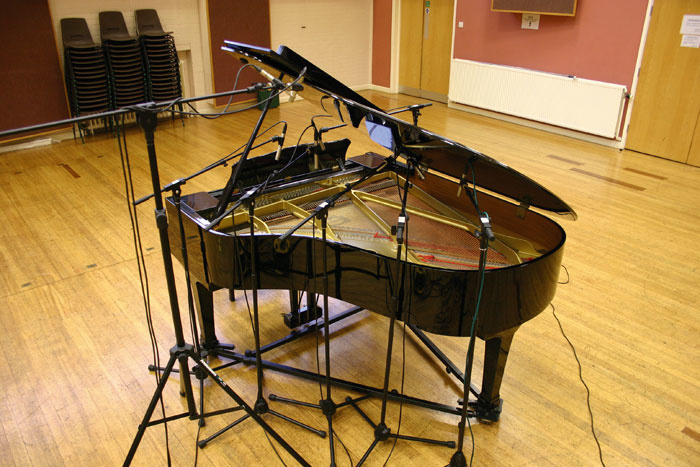
Let’s explore a practical example: recording a piano. Utilizing numerous microphones, the piano’s sound is captured comprehensively. However, when played back through just two speakers, it’s impossible to accurately recreate the piano’s spatial presence without an equivalent number of speakers corresponding to the microphones used.
For instance, at Abbey Road Studio 1, recordings often use as many as 27 microphones, each positioned strategically around the instruments.
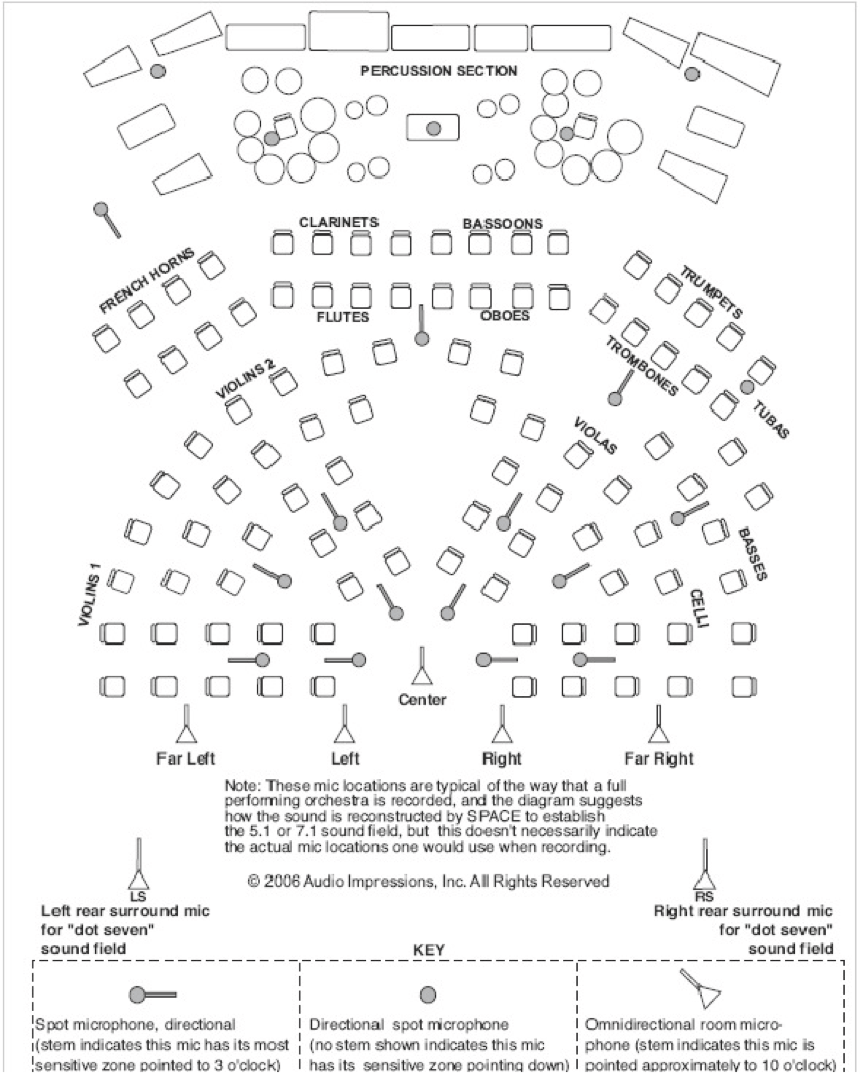
These microphones capture different sound components and locations, creating a complex soundscape that’s difficult to reproduce exactly with traditional stereo systems.
Challenges with Multi-Microphone Recording
The principle of reversibility implies that to achieve an accurate playback, the number and arrangement of playback systems should match the recording setup. However, stereo recordings condense multichannel inputs into two channels, leading to issues such as group propagation delay (GPD) and phase problems during mixing. These mismatches result in a sound that can feel disjointed or unnatural.
This complexity elevates the role of sound engineers who mix these recordings. They often hold the copyrights to the recordings, overshadowing the performers’ contributions. This approach not only inflates their services but also distances the final product from the original live performance that end consumers — the listeners — seek.
The Rise of the Sound Engineer’s Role
Since the 1950s, sound engineers have dominated the audio market, employing extensive arrays of microphones and large soundboards. Earlier methods adhered to the reversibility principle, using just two NEUMANN microphones placed with critical precision. This method required laborious testing and adjustment, capturing a pure, immersive sound that modern recordings often lack.
The diagram below illustrates the conventional sound engineering setup where microphones symbolically represent the listener’s ears.
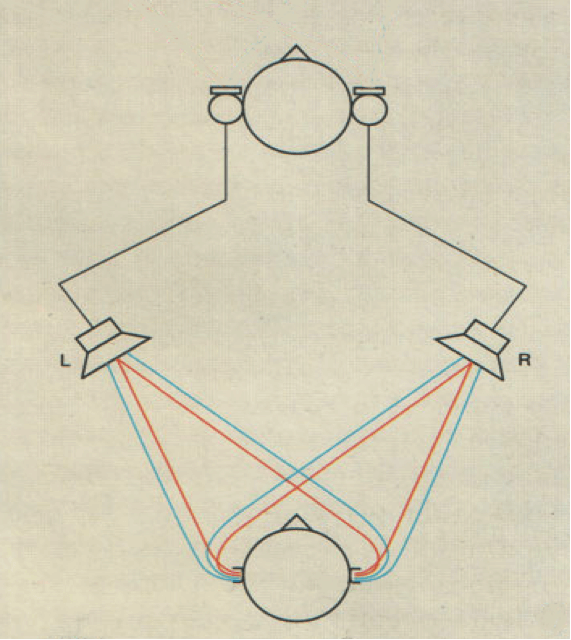
Ideally, multi-microphone recordings would mean listeners also need multiple playback channels to hear the sound as intended.
The End Consumer’s Dilemma
Historically, a single microphone recorded mono sound from the front of the stage, with a corresponding single speaker for playback. Many still cherish the simplicity and clarity of mono recordings, which lack the complexities and potential errors of multi-microphone setups.
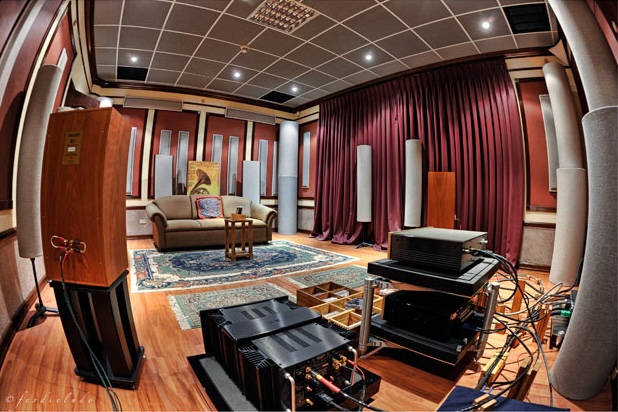
In contrast, today’s consumers often face poorly arranged playback systems, with speakers mounted in ceilings, walls, or awkward corners, leading to subpar sound quality — even from high-end systems.
Correct speaker placement is crucial and reflects the natural acoustics and dynamics of a recording.
PolyDan Sound Laboratory
Conclusion
For hi-fi enthusiasts, proper speaker placement and adherence to the reversibility principle are crucial for experiencing the true essence of a recording. Maintaining these principles allows one to appreciate the nuances and quality of high-fidelity recordings, offering a richer and more engaging listening experience. More detailed guidance on speaker placement can be found here.
Fans of traditional speaker arrangements may continue to experience a constrained sound field, but those who adopt these principles can unlock the full potential of their audio systems, transforming their listening environments into spaces where music truly comes to life.